
Our instruments
Across our two labs we have five Bruker timsTOF platforms, each paired with an Evosep One LC, used for everything from single-cell discovery to high-throughput body-fluid cohort studies. By distributing applications strategically across instruments, we balance ultra-high sensitivity with industrial-scale throughput.
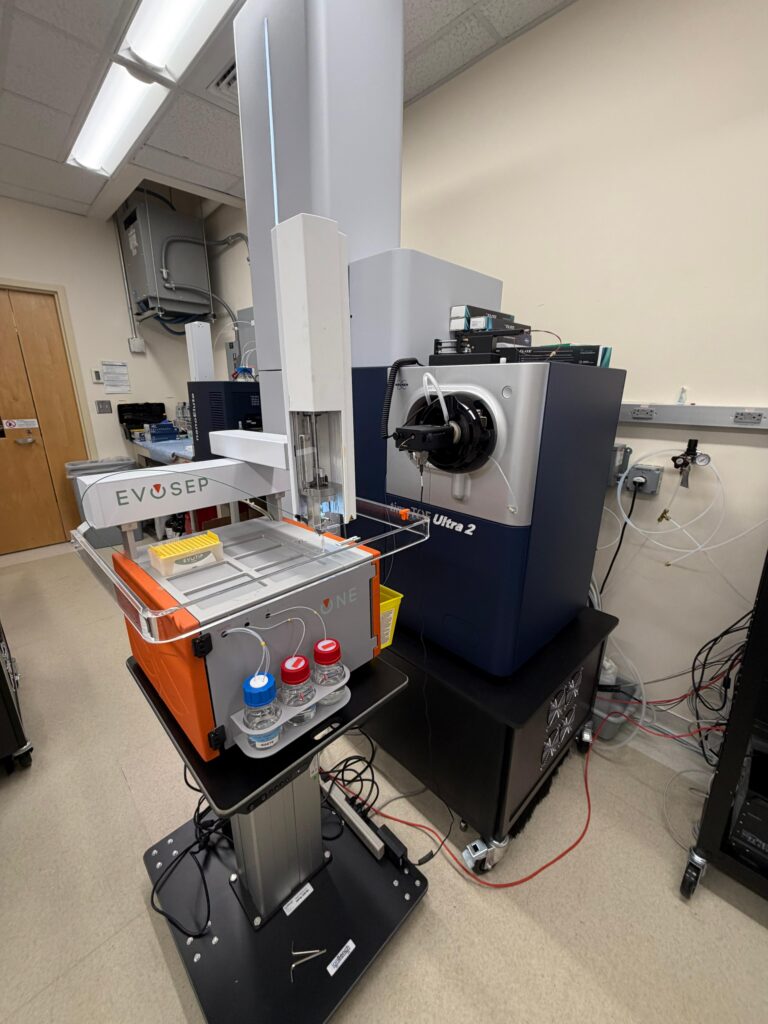
Trakr
timsTOF Ultra 2
Our timsTOF Ultra 2 is optimized for ultra-low input and Deep Visual Proteomics. Running Whisper Zoom 40 SPD on the Evosep One, Trakr delivers exceptional depth when sample material is limited. ICC 2.0 (Ion Charge Control 2.0) enables flexible loading while maintaining spectral clarity.
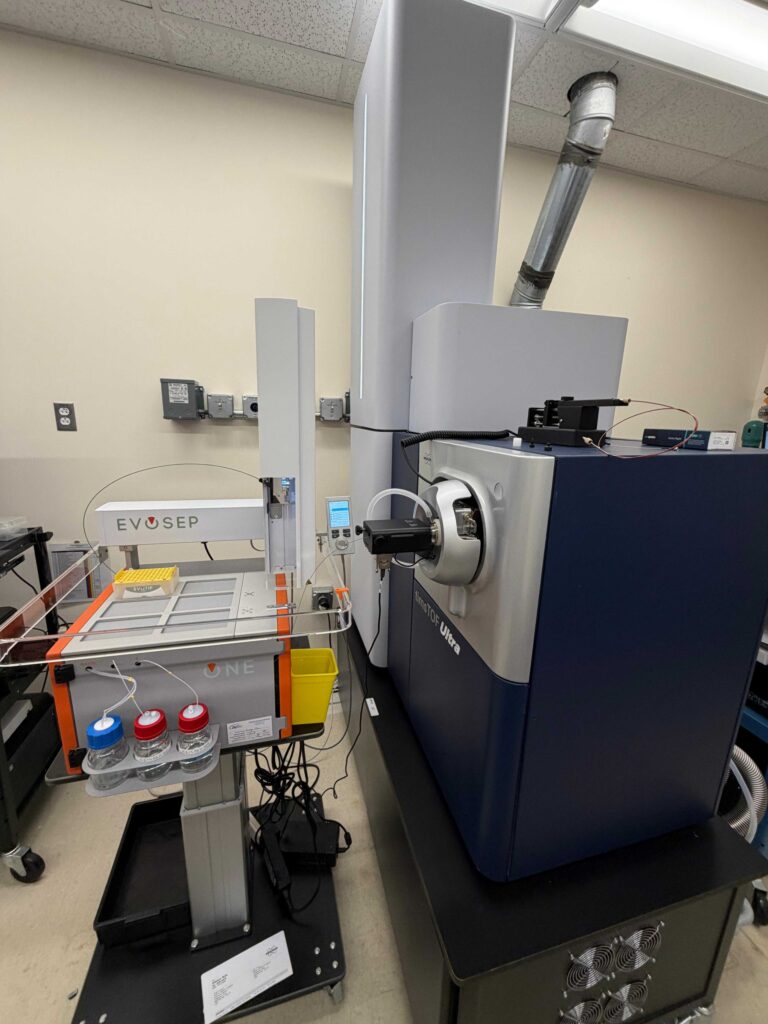
Hachikō
timsTOF Ultra
Dedicated to single-cell proteomics using Whisper Zoom 80 and 120 SPD methods, Hachiko consistently delivers high sensitivity and quantitative robustness—remaining one of the strongest performers in the lab.
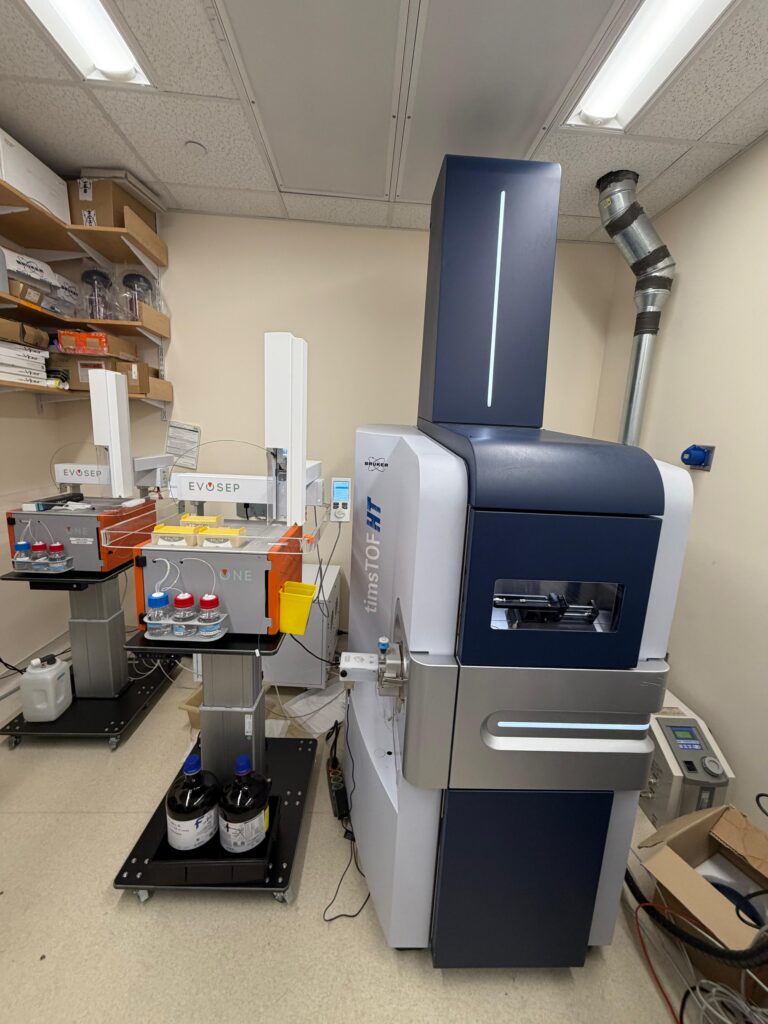
Togo
timsTOF HT
The CLS workhorse of our Neurobiology lab using 30, 60, and 100 SPD methods, Togo powers high-depth projects where sample input is not limited driving much of our manuscript output.
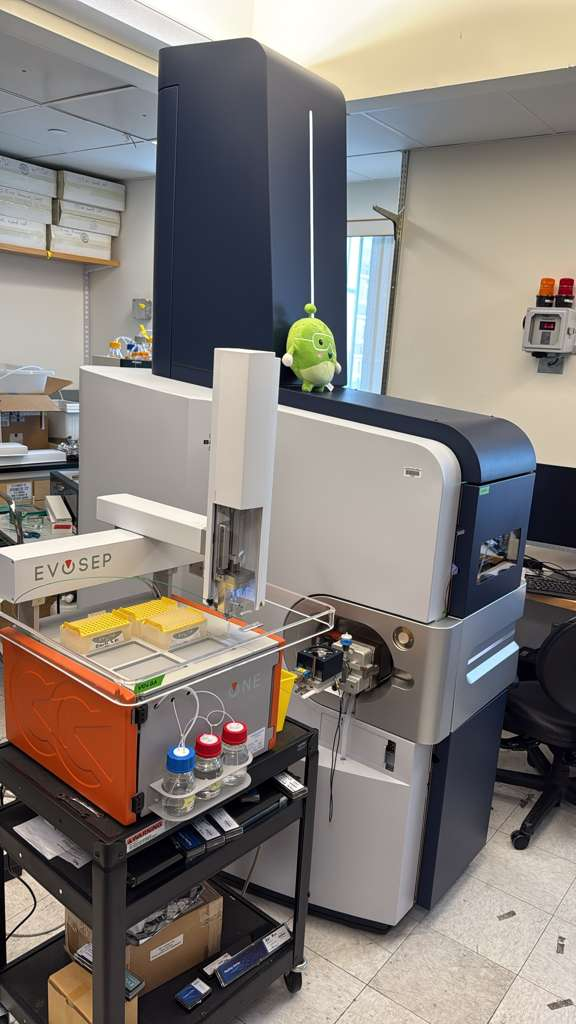
Laika
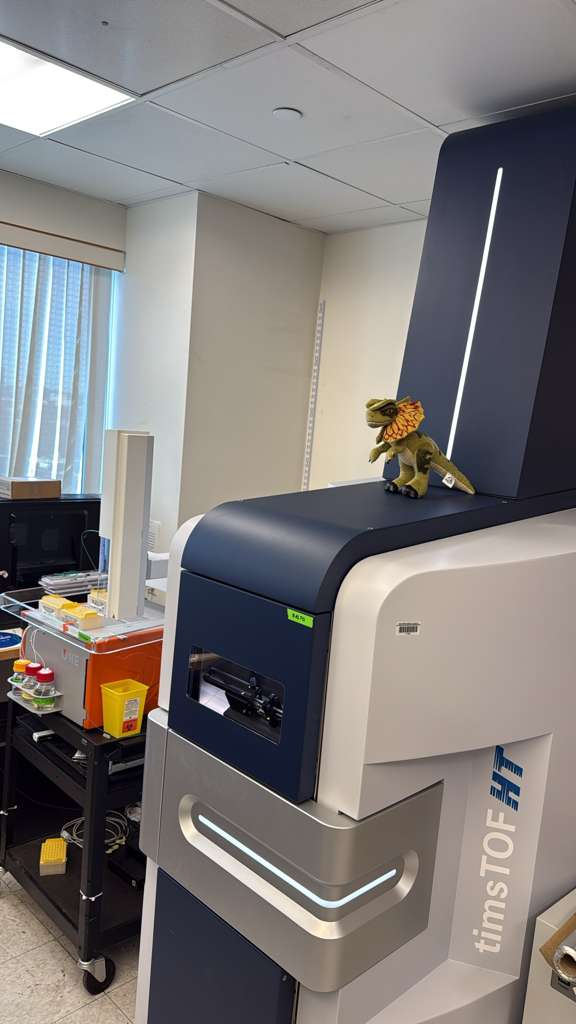
timsTOF HT
The backbone of the Pathology lab configured as a timsTOF HT with Evosep One 60 and 100 SPD methods, Laika handles high-throughput body-fluid proteomics and large clinical cohort studies with speed, reproducibility, and remarkable consistency.
Balto
timsTOF HT
Laika’s twin also a timsTOF HT with 60 and 100 SPD methods, Balto brings additional throughput and flexibility to large-scale clinical proteomics efforts.
Shimadzu
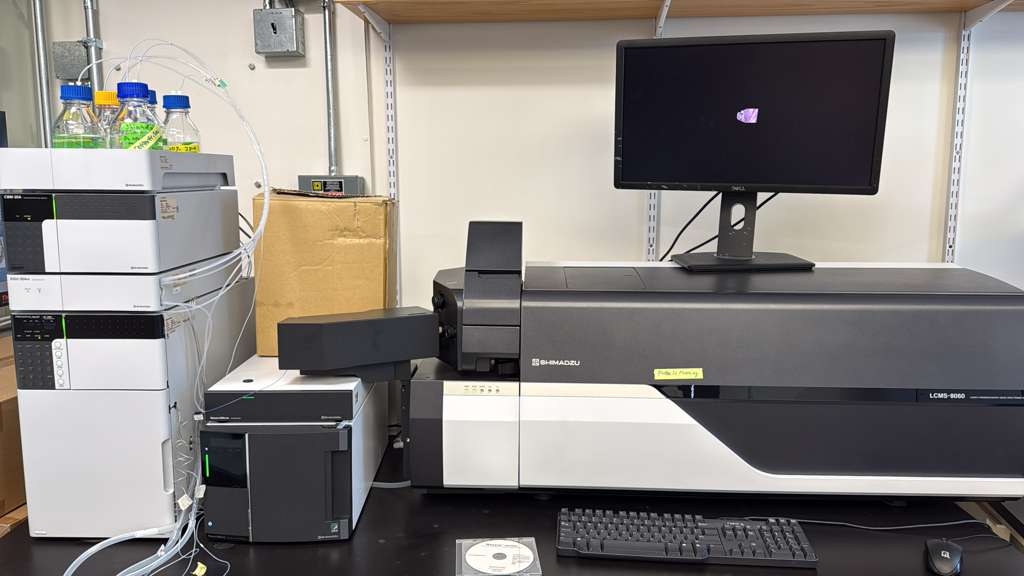
Shimadzu 8060
The Shimadzu 8060 triple quadrupole mass spectrometer, coupled to a Shimadzu Nexera X2 LC system support our targeted proteomics workflows. These platforms are optimized for MRM-based assays and high-sensitivity quantitative measurements. They are primarily used for our targeted proteomic projects, including the FLEXITau assay.
QTRAP
SCIEX QTRAP 5500
The SCIEX QTRAP 5500 paired with an Eksigent LC system support our targeted proteomics workflows. These platforms are optimized for MRM-based assays and high-sensitivity quantitative measurements. They are primarily used for our targeted proteomic projects, including the FLEXITau assay.
LMD7
Leica LMD7
The LMD7 laser microdissection system enables precise, contamination-free isolation of visually defined regions and cell populations from tissue sections, serving as a key front-end technology for spatial and deep visual proteomics. By linking high-resolution microscopy with UV laser-based microdissection, LMD7 translates histological and immunostaining features directly into proteomics-ready samples. Its gravity-assisted collection supports ultra-low input workflows, making it ideal for spatial proteomics of rare cells, microenvironments, and heterogeneous tissues.
Opentrons
Opentrons OT-2 and Flex
The Steen Lab at Boston Children’s Hospital operates a uniquely scalable, automation-driven high-throughput body fluid proteomics platform built on three Opentrons OT-2 systems and one Opentrons Flex, with each instrument enabling parallel, standardized processing of up to 192 samples per day. Our sample-sparing workflow requires only microliter-scale input (as little as 1 µL plasma or 50 µL urine) and has supported the processing of tens of thousands of clinical body fluid samples, including large consortium-scale studies. Validated across plasma, serum, urine, CSF, tracheal aspirates, and saliva, this high-fidelity, cost- and time-efficient pipeline delivers reproducible, mass spectrometry–ready data matrices for rapid biomarker discovery and validation, and will serve as the automated core infrastructure of Professor Hanno Steen’s Translational Body Fluid Proteomics Center.
WOLF G2
NanoCellect WOLF G2
Our WOLF G2 integrates cartridge-based, low-pressure microfluidic cell sorting into our workflow, ensuring gentle handling of fragile and rare cell populations. Unlike conventional high-pressure droplet sorters, it minimizes shear stress, preserving cell viability, native transcriptional states, and proteomic integrity for downstream mass spectrometry. Equipped with two lasers for accurate fluorescence-based discrimination, the system enables efficient multi-parameter sorting and high-quality single-cell isolation into 96- or 384-well plates. From delicate primary neurons to rare immune subsets, the platform ensures biologically intact, precisely defined cells ready for advanced omics applications.